



The moment Antarctica becomes real
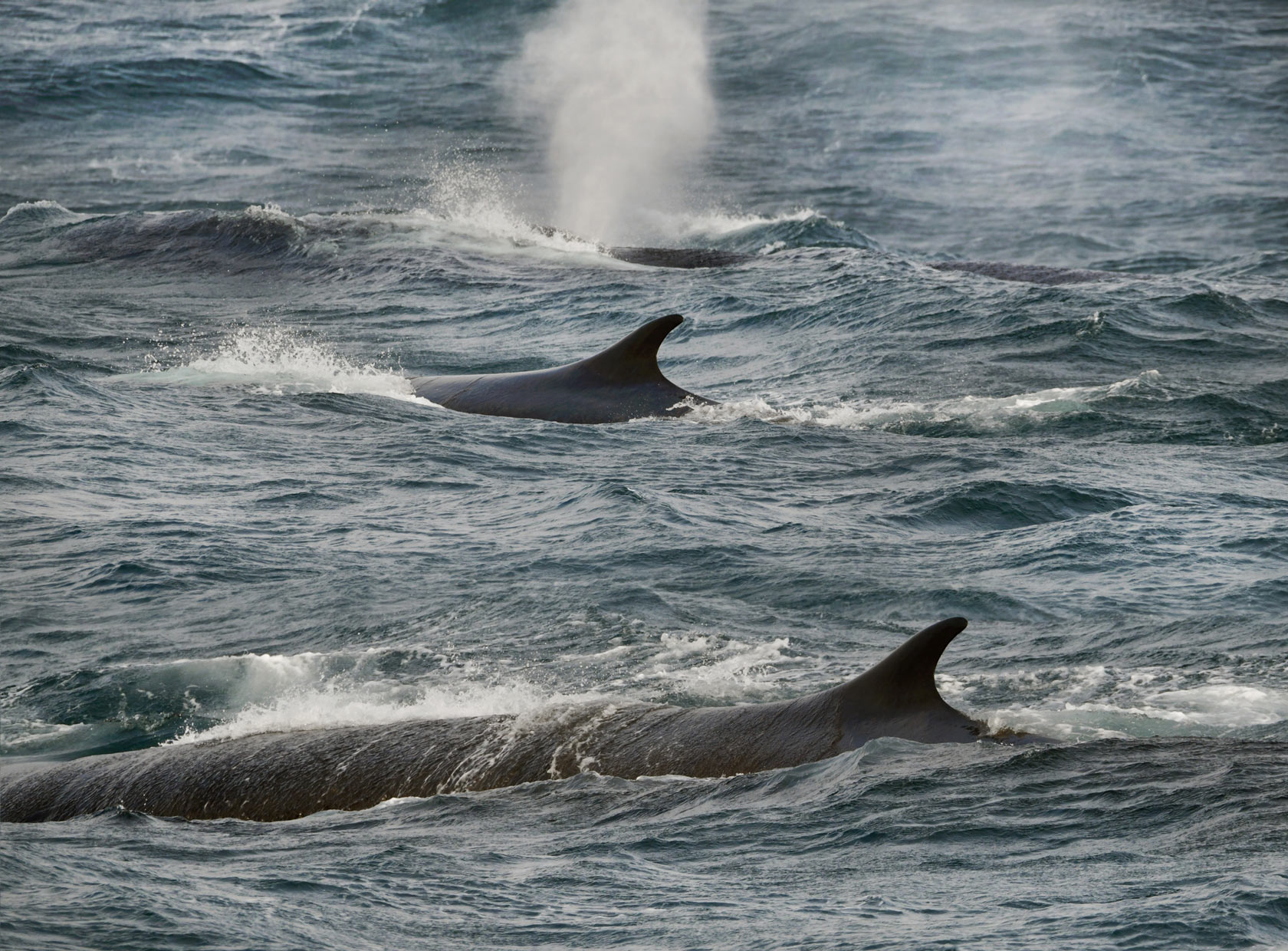
For many travelers, Antarctica begins as a dream. Vast ice fields stretching to the horizon, humpbacks breaching in pewter-gray seas, snow-capped peaks rising improbably from the Southern Ocean. But before that dream takes shape, there is a crossing as storied and stirring as the continent itself.
Spanning the open waters between the southern tip of South America and the Antarctic Peninsula, the Drake is unlike any stretch of ocean on Earth. Here, the Atlantic, Pacific, and Southern Oceans converge in a swirl of competing currents. And the familiar world you left behind begins to feel very, very far away. The Drake isn't simply a route to Antarctica, it is the beginning of it.
Sailors and explorers have been reckoning with these waters for centuries. Francis Drake himself was blown far south into open ocean after passing through the Strait of Magellan in 1578, though it would take another navigator, the Dutchman Willem Schouten, to actually sail the passage in 1616. The crossing has carried Drake's name—and its reputation—ever since. Whalers, sealers, scientists, and the adventurers followed, each making the crossing in turn. They understood something that modern travelers soon discover for themselves: arriving at Antarctica slowly, across these remote waters, changes the way you receive it.
There are no airports at the end of the Drake. No roads, no terminals, no lines. Just water, then ice, then one of the last truly wild places on the planet. And the crossing itself, two full days at sea, does something to you. The thoughts of ordinary life quiet. Conversations gravitate toward the journey ahead: What will the ice look like? Will we see penguins on the first day? How cold will it really be? By the time the first iceberg appears on the horizon, you are already somewhere else entirely.
The Drake Passage is renowned for its ever-changing personality. Some days, the ocean is calm and reflective; on others, it reminds you just how powerful the Southern Ocean can be. Both versions are part of the experience, and both are in their own way unforgettable. In fact, this variability is precisely what has given the crossing its legendary status—and what makes preparation and ship design so important.
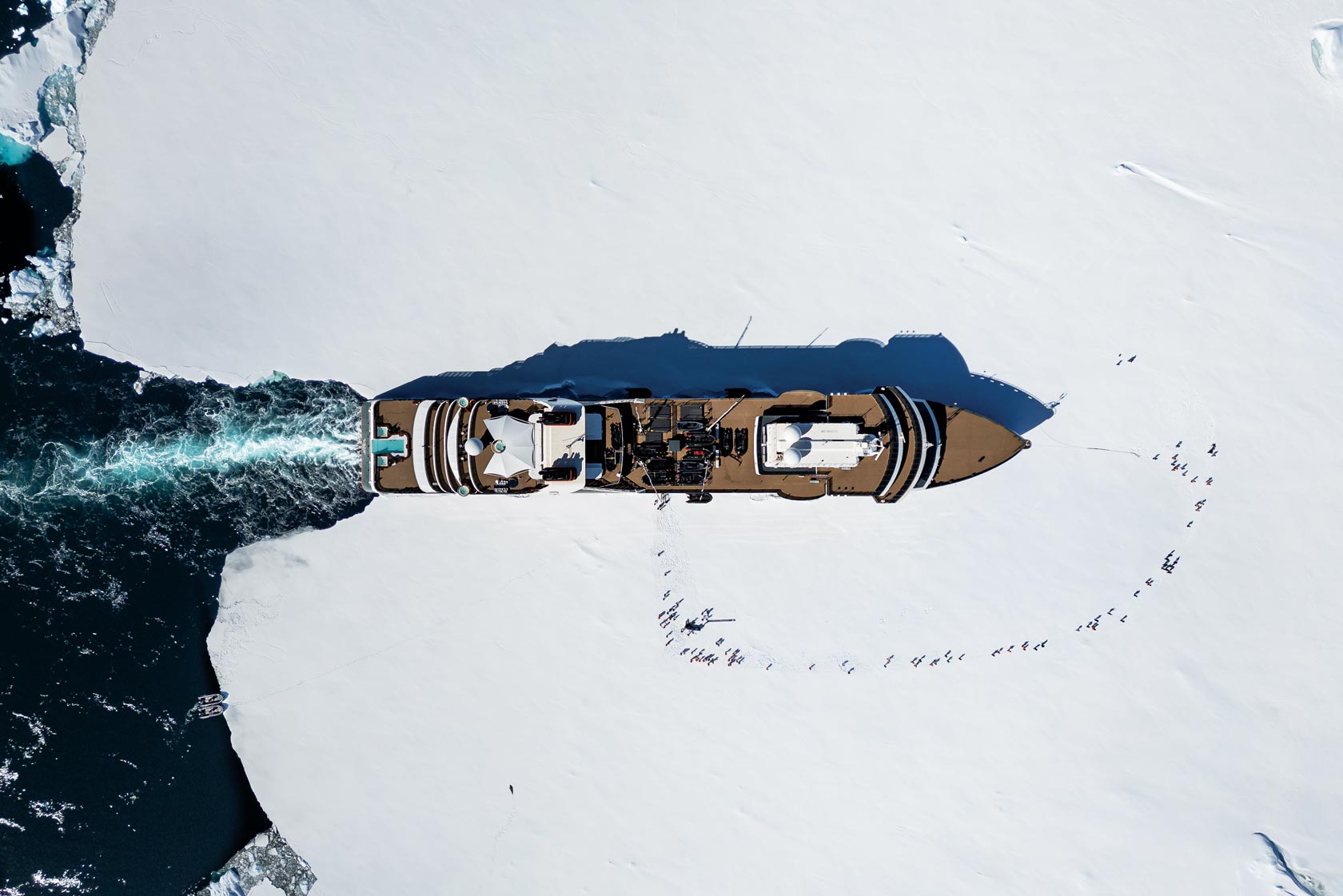
Seabourn’s expedition vessels are engineered for polar seas: stabilized, reinforced, and designed to move through challenging conditions with quiet confidence. With fewer guests onboard than larger cruise ships, there is a sense of calm and space that becomes its own kind of luxury: understated, unhurried, and especially welcome as the Southern Ocean stretches endlessly around you. The interiors are spacious and warm, with wide windows framing an ever-changing seascape from almost every vantage point.
The days on the Drake are not idle ones. Seabourn's Expedition Team—scientists, naturalists, historians, and photographers who know these waters intimately—begins bringing Antarctica into focus well before land appears. Lectures and discussions delve into glaciology and climate, into the ecology of the Southern Ocean, into the extraordinary stories of the explorers who came before you. Gear fittings and expedition briefings ensure you're ready to step ashore the moment the opportunity arises.
And then there is simply the pleasure of being at sea. A long breakfast while watching the ocean slide past. An afternoon in the Observation Lounge as a distant squall darkens the horizon and then clears. The crossing has a rhythm, and settling into it is part of the joy.
Antarctica is not a place that gives itself up easily, and perhaps that is exactly as it should be. The continent rewards patience, curiosity, and a willingness to arrive on its own terms. Crossing the Drake doesn't just get you there, it prepares you for what you're about to see. By the time the white ramparts of the peninsula come into view, the crossing has already done its quiet work.
You haven't just traveled to Antarctica, you've earned your way there. And that first sight of ice will feel, in every sense of the word, like an arrival.
Consider these upcoming voyages:
56-Day Scotia Arc, Canary Islands & Spain
DEPARTS: Buenos Aires
ARRIVES: Seville, Spain
Mar 2, 2027
from $46,898*
Explore Itinerary*Per Person, USD. Taxes and Fees are included. Additional terms apply.
66-Day From The Scotia Arc To Storied Spanish Coasts
DEPARTS: Buenos Aires
ARRIVES: Amsterdam, The Netherlands
Mar 2, 2027
from $54,398*
Explore Itinerary*Per Person, USD. Taxes and Fees are included. Additional terms apply.
13-Day Antarctica Exploration
ROUNDTRIP: Buenos Aires
Jan 29, 2027
from $24,298*
Explore Itinerary*Per Person, USD. Taxes and Fees are included. Additional terms apply.

Consider these upcoming voyages:
56-Day Scotia Arc, Canary Islands & Spain
DEPARTS: Buenos Aires
ARRIVES: Seville, Spain
Mar 2, 2027
from $46,898*
Explore Itinerary*Per Person, USD. Taxes and Fees are included. Additional terms apply.
66-Day From The Scotia Arc To Storied Spanish Coasts
DEPARTS: Buenos Aires
ARRIVES: Amsterdam, The Netherlands
Mar 2, 2027
from $54,398*
Explore Itinerary*Per Person, USD. Taxes and Fees are included. Additional terms apply.
13-Day Antarctica Exploration
ROUNDTRIP: Buenos Aires
Jan 29, 2027
from $24,298*
Explore Itinerary*Per Person, USD. Taxes and Fees are included. Additional terms apply.
Meet the experts guiding guests every step of the way, only with Seabourn.
Learn about the animals you’re likely to see during a trip to the White Continent
Plus, Seabourn insiders share top tips for first-time cruisers.
New to cruising? We know where you should go first